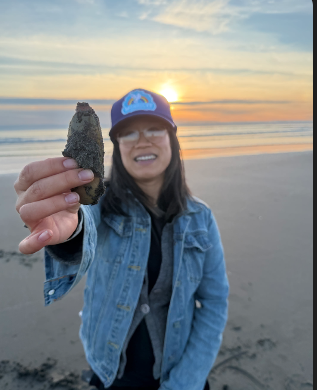
There is a shipwreck on the Oregon coast that has been rusting into the sand for over a hundred years. The Peter Iredale ran aground on Clatsop Spit in October of 1906, and what remains of her iron hull sits at the edge of the surf line at Fort Stevens State Park — salt-bleached, barnacled, and photogenic enough to appear on roughly a thousand Oregon postcards. Most people stop, take a picture, and drive home. The people who know better bring a clam gun.
The beaches surrounding the Peter Iredale — Clatsop Spit, Del Rey Beach, Gearhart, and the wide flat stretches south toward Seaside — are some of the most productive razor clamming grounds in Oregon. They are also about two hours from Portland on a straight shot down Highway 30. With the right tide, you can leave the city before dawn, fill a limit of fifteen clams per person in under an hour, clean them at a state park with running water, eat lunch at a diner in Astoria, and be home by mid-afternoon. It is one of the best day trips the Pacific Northwest has to offer, and most Portlanders have never done it.
This is how you do it right.
Before You Leave Portland
The single most important step happens the night before — or the morning of — the drive. You need to know two things: the tide time and the biotoxin status.
Razor clamming only works on a low tide, and not just any low tide. You want something at or below negative one foot. The best digs happen at negative 1.5 feet or lower. Check the tide tables for Seaside (it shares a NOAA station with the Clatsop Spit beaches) and build your entire day around the low tide window. You want to be on the beach one hour before the low, digging when the water pulls back its furthest. Plan your drive accordingly — if the low tide is at 10 a.m., you are leaving Portland by 7.
Tide ratings we use: Excellent is anything below −1.0 ft. Good is −0.4 to −0.9 ft. Anything above that is marginal. Do not make the two-hour drive for a +0.2 ft low tide. It is not worth it. Check our for 2026 dates with excellent tides already flagged.
The second check is the ODFW biotoxin hotline: 1-800-448-2474. Call it or check the ODFW website. Razor clam beaches close without warning when harmful algae bloom levels get too high, and the toxins are invisible. This is a non-negotiable step. The hotline takes thirty seconds to check and could save you a very bad night.
Licenses. Everyone in your group age fourteen and older needs a valid Oregon shellfish or angling license. Buy them online at myODFW.com the night before — you can pull them up on your phone at the beach. Kids under fourteen dig free and do not need a license, though they do need their own container and must dig their own clams. That rule, incidentally, is a feature rather than a bug. Watching a seven-year-old hunt their first clam is the entire point of the trip.
The Route
Take Highway 30 west out of Portland along the Columbia River. This is a better drive than Highway 26 to the coast — slower, yes, but the route follows the river through Scappoose, St. Helens, Rainier, and Clatskanie before crossing into Astoria. Bald eagles on the mudflats are common in winter. If you have time and daylight, it is worth it. If you are racing a morning tide, take 26 to 101.
Astoria is worth a stop if time allows. Coffee at Astoria Coffee House on Commercial Street, or grab something quick at one of the drive-through spots if you are tide-chasing. The town sits on a hill above the Columbia and has more character per square block than almost anywhere in Oregon. You will want to come back and spend more time here — plan on it for the return trip.
From Astoria, take Highway 101 south briefly, then follow signs to Fort Stevens State Park. The park charges a day-use fee — have a few dollars ready or grab an Oregon State Parks pass if you visit parks regularly. Follow the signs to the Peter Iredale parking area. You will see the wreck from the lot. Walk south along the beach from the wreck — the clamming starts right there and stretches for miles.
On the Beach
Razor clams live in the wet sand just below the surf line — the zone that gets exposed as the tide pulls back. Walk out toward the water until the sand is firm and wet underfoot. Look down. You are looking for a small dimple or keyhole-shaped depression in the sand, about the diameter of a dime. That is a clam show. The clam is directly below it, usually six to ten inches deep, moving downward fast the moment it senses vibration.
"Place your clam gun over the show, push straight down, cover the air hole on top with your thumb, pull up. Most of the time the clam comes with it. When it does not, dig fast with your free hand. They move."
The technique has a learning curve of about twenty minutes. Your first few clams will be frustrating — you will miss them, dig too slow, break a shell. That is normal. By clam number five you will have the rhythm. By clam ten you will feel like you have been doing this your whole life.
The rule everyone forgets: you must keep the first fifteen clams you dig. No sorting. No releasing a small one and keeping a better one. No breaking a shell and deciding it does not count. The moment a clam comes out of the sand, it counts toward your limit. Oregon takes this seriously and wardens do check bags on busy beaches.
Oregon law requires you to keep the first 15 clams you dig — regardless of size, condition, or whether the shell is cracked. A broken clam still counts. No sorting, no releasing. Dig the whole limit before you start picking through them.
On a good minus tide, a family of four can fill four limits — sixty clams — in under an hour. Then you walk back along the beach past the wreck, which by now you have completely stopped noticing because you are too busy looking for shows, and load the cooler into the car.
After the Dig — Cleaning Your Clams
Fort Stevens has a cleaning station near the campground with running water and a drain — it is one of the better ones on the coast. Use it. Cleaning sixty clams in a parking lot without running water is a miserable experience. The station is a short drive from the Iredale beach; follow the park road signs.
The basic method: a pot of boiling water (or hot water from a thermos works in a pinch), a quick dip — about ten seconds — and the shells pop open. From there you pull the clam, peel the digger membrane, remove the gills and dark stomach, and rinse. Each clam takes about two minutes once you have the rhythm. Pack them in a zip-lock with a little seawater or simply ice them down whole and clean at home.
If you would rather clean at home, that is completely fine. Clams keep well on ice for several hours. Many people prefer cleaning in their own kitchen where the mess is more manageable. Either way, get them on ice immediately after the dig — do not leave them sitting in a bucket in the sun.
We have a full step-by-step cleaning guide with photos and video on the site. If this is your first time, read it before the trip so you know what you are looking at when you open the first clam. See: How to Clean Razor Clams →
Lunch in Astoria
You have earned it. Drive back into Astoria and eat. The town punches well above its weight for food, and after a cold morning on the beach you will be ready for something substantial.
Bowpicker Fish & Chips on Duane Street is a converted gillnetter tied up at the dock that serves albacore tuna fish and chips out of a window. It is one of the best things you can eat in Oregon and the line is worth it. Cash only, seasonal hours — check before you go.
Fort George Brewery is two blocks away and has a full kitchen. The Cavatica Stout on a cold morning after a dig is about as good as it gets. The pizza is excellent.
Blue Scorcher Bakery on Exchange Street is worth knowing about for pastries and coffee if you want something lighter, or if you are traveling with kids who are not quite ready for a brewery at noon.
On the Drive Home
Take the Astoria-Megler Bridge across the Columbia into Washington if you have never done it — it is four miles long, it opens at road level before climbing to a high drawspan, and the views back toward Astoria are genuinely spectacular. Cross over, turn around, cross back, and take Highway 30 east along the Oregon side of the river toward Portland.
The clams will keep in the cooler for the drive. Tonight or tomorrow you fry them in butter with Ritz crackers and eat them with someone you love. That is the whole trip. Two hours out, one low tide, a rusted ship, a good lunch, two hours back. Almost every weekend between October and July the tides line up for it somewhere on the Clatsop County coast.
There is no good reason not to go.